


Implementing an HOA Complaint Procedure – Slideshow Presentation
Still need information for your association’s required Complaint Procedure? Here is the slideshow for the Complaint Procedure Seminar Sept 2012 revised Susan Tarley presented in Williamsburg in September 2012.

This slideshow presentation is provided for informational and educational purposes only. This presentation does not constitute legal advice and should not be relied on. Legal advice can only be provided after consultation with an attorney with experience in the area in which your concern lies. This is so because each situation is fact specific, and it is impossible to evaluate a legal problem without a comprehensive consultation and review of all the facts and/or documents at issue. Your use of this slideshow presentation and the information in it does not create an attorney-client relationship. Such a relationship can be created only with a written agreement signed by us and by you.
Tarley Robinson, PLC, Attorneys and Counsellors at Law
Williamsburg, Virginia
2015 General Assembly Update for Virginia Community Associations
The legislation that passed the 2015 General Assembly Session is mostly helpful to Virginia HOAs–clarifying issues created by some legislation, and providing solutions for owner apathy and bank foreclosure problems for associations.
Continue reading “2015 General Assembly Update for Virginia Community Associations”
How to Run An Effective HOA Board Meeting
Have you ever asked yourself after an Association board meeting “what went wrong?” The flow of the meeting was off, the meeting went on way too long and the atmosphere was unwelcoming for the owners who came to observe. With some careful preparation and attention to some simple tips, you can leave your next board meeting with the feeling that everything was right on track. Although we go into much greater detail when we hold our annual Board training seminars for our clients, this blog post provides some helpful tips to run your next board meeting.

Continue reading “How to Run An Effective HOA Board Meeting”
HOAs, ADA, and FHA: regulating “Service or Assistance Animals”
Recent amendments to the Americans with Disabilities Act (the “ADA”) regulations limit the definition of “service animal” to any dog that is individually trained to do work or perform tasks for the benefit of an individual with a disability, including a physical, sensory, psychiatric, intellectual, or other mental disability. The amendments specify that providing “emotional support, well-being, comfort, or companionship do not constitute work or tasks” under the new definition.
On the other hand, if your situation is not an ADA issue but rather a Fair Housing issue, a recent memo clarifies that the new definition is not applicable to the Fair Housing Act (the “FHA”). The FHA does not contain a specific definition of “service animal.” Under the FHA, animals that provide emotional support have, in certain instances, been recognized as necessary assistance animals as a reasonable accommodation. The FHA permits individuals with disabilities to keep an assistance animal as a reasonable accommodation when there are limitations imposed by the homeowner or condominium association on animals and pets.

Continue reading “HOAs, ADA, and FHA: regulating “Service or Assistance Animals””
Virginia Supreme Court upholds arbitration award granted to homeowners who sued their HOA
It is relatively routine for developers or “declarants” to include arbitration provisions into the declaration of restrictive covenants recorded to establish a common interest community. Generally, arbitration clauses are preferred by developers for a variety of reasons including avoiding a jury and having a say in the choice of the fact-finder. However, those decisions made by the developers have long lasting effects upon homeowner boards following transition, because it is difficult for a board to effect a change in the documents.

Attorneys’ Fees and Litigation – When fees get awarded to the “Prevailing Party”
In litigation matters involving common interest communities (otherwise known as homeowners associations (“HOAs”) or condominium owners associations (“condo associations”)), the issue of awarding attorneys’ fees for prevailing parties ultimately arises. Generally, the HOA’s Governing Documents or the condo association’s Condominium Instruments contain such a provision. Otherwise, attorneys’ fees may be recoverable by statute for HOAs and condo associations.
These attorney fee-shifting provisions, either by contract or statute, are contrary to the typical “American Rule” cases in which each side pays their own attorneys’ fees. Because litigation has become so expensive to pursue, whether to award attorneys’ fees, and the amount of any award, has become separate litigation on its own at the conclusion of cases.
In the recent case of Dewberry & Davis, Inc. v. C3NS, Inc., the Virginia Supreme Court was faced with the issue of “whether the circuit court erred in applying an attorneys’ fees provision of a contract.” We had previously blogged about this case, because in the underlying contract between the parties, Dewberry & Davis, an engineering company, had limited its liability for damages. The trial court had determined the limitation of liability clause was void, pointing to a recent change to Virginia Code § 54.1-411that permitted an engineering company to include a limitation of liability clause. Because the contract predated the code change, the court determined that those changes “demonstrate that the General Assembly fully intended to alter the statute’s intent.”
The case continued to trial, and eventually, upon appeal, to the Virginia Supreme Court. This blog post explains that Supreme Court decision relating to the award of attorneys’ fees.

Continue reading “Attorneys’ Fees and Litigation – When fees get awarded to the “Prevailing Party””
2014 CAI Annual Legal Seminar in Las Vegas
Susan Tarley is attending the 2014 CAI Legal Seminar in Las Vegas this week. This seminar brings together all of the leading community association legal professionals and is chock-full of interesting classes. As stated in the brochure, “The Law Seminar provides a unique learning opportunity to discuss emerging trends and legislative issues important to the practice of community association law.”
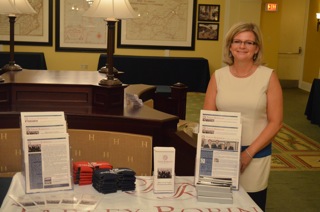
On Wednesday night, Susan will attend the dinner for all attorneys who have been admitted into the College of Community Association Attorneys (“CCAL”). Susan is one of fewer than 150 attorneys nationwide to be admitted to CCAL, for distinguishing herself through contributions to the evolution or practice of community association law.
On Thursday afternoon, Susan will be a panelist on a Panel of Pundits. This panel of six distinguished HOA attorneys will field questions via Twitter, text message, computer, and in person. If you have a question, click here for the details and ask it!
On Friday, Dan Abrams from ABC is the keynote speaker. Finally, on Saturday, there are sessions discussing issues HOAs face in collections and insurance.
Our attorneys participate and take leadership roles in our areas of practice in order to provide our clients with fully informed advice. By participating in events like the annual CAI Legal Seminar, we do our best to serve our clients.
Limited Liability Companies: What happens to an LLC when a Member dies?
This case has been overturned by statute. Check out this blog post for the details.
We have written about the importance of operating agreements to help succession planning for your limited liability company (“LLC”). Operating agreements can help the company with procedures to remove a member, or with procedures to permit a member to leave the LLC on his own accord. This blog post reviews a recent Virginia Supreme Court case that shows the importance, and limitations of your LLC operating agreement to set forth succession planning of a member’s interest when that member dies.

LLC Agreements
Continue reading “Limited Liability Companies: What happens to an LLC when a Member dies?”
James City County offering Good Neighbor Grant to HOAs and other neighborhood associations
We frequently blog on the importance of cooperation and relationship-building in your homeowner association or condominium association. Here is an easy and practical way to build your association’s camaraderie as James City County is sponsoring a Good Neighbor Environment Matching Grant for the fall of 2013.

The county’s stated purpose of the grant ” is to enhance the sense of community and environmental wellness of our neighborhoods through the development and accomplishment of a neighborhood sustainable landscape beautification project.” Consequently, the two categories for the grant are Physical Improvement/Sustainable Landscaping and Multi-Neighborhood Project Partnerships.
The grant is not limited to “formal” HOAs or Condo Associations, as any neighborhood association or neighborhood committee authorized “to manage and/or maintain the common areas of a community” may apply. However, such a neighbor association or committee has a few more obstacles to overcome to apply.
Applications are due on September 30, 2013, and the grants will be announced on October 15, 2013. We will make this information known to our association clients, but anybody is welcome to pass along this link to the application. Let us know if we can help your association apply for this Good Neighbor grant.
Tarley Robinson, PLC, Attorneys and Counsellors at Law
Williamsburg, Virginia
2013 Legislative Update for Virginia HOAs
The (“LAC”) had a busy 2013 legislative session. This is my third year on the LAC and each year brings new challenges. Our mission is to monitor and influence legislation affecting community associations. This year I served as the Chair of the LAC and we monitored over 30 bills and were active on over 10 of the bills. We were successful in getting some bills tabled, some modified, and some passed. All of the bills cited below are effective July 1, 2013 unless otherwise noted. If you have any questions on the impact of these changes for your community, please let us know.
Legislation
Continue reading “2013 Legislative Update for Virginia HOAs”