


What Should You Expect From Your Attorney?
I read a recent article in the ABA Journal that differentiated between the teaching of “issue spotting” versus “problem solving” in law schools. This article strikes at the core of the services we provide as attorneys. We believe firmly that although it is our responsibility to help identify potential issues that you may face, our legal advice is fully realized when we help you solve your problems.
Continue reading “What Should You Expect From Your Attorney?”
What Does It Mean to be on the Board of Directors of your HOA? Potential Liability (Part 2 of a Series)
We frequently are asked whether volunteer board members can be civilly liable for actions taken while a board member. This issue is of serious concern because lawsuits tend to be over inclusive, naming every possible defendant in the initial complaint. Why sign up as a volunteer board member if it could bankrupt you?

What happens when your business partner wants to leave? Do’s and Don’ts
It’s a simple fact of business life that you and your company’s fellow shareholders or members will not always see eye-to-eye. Furthermore, our personal lives change and that effects the level of willingness in which some participate in a business venture.
As in any relationship, businesses also reach that awkward stage in which a shareholder or member wants to leave his current business venture and start something new. We have discussed starting your business and provided guidelines for setting forth the rules for governing your business. This article addresses some of the difficulties that arise during the “break-up period.” For the purposes of this article, we will use the terms “shareholder” and “member” interchangeably, as well as the terms “director” and “managing member.”

Can HOAs suspend pool privileges to collect unpaid assessments?
As summer begins and the temperature rises, people are eager to cool off in community pools. For homeowner’s associations and condominium associations, this can be an opportunity to encourage members behind in their assessments to get caught up.
Before an association starts suspending pool passes to encourage members to pay their dues, however, it should be aware of provisions in Virginia Law that affect what actions it can take. Both the Virginia Property Owners’ Association Act and the Virginia Condominium Act allow an association to suspend services (including use of common areas such as pools) for failure to pay assessments, as long as the association complies with certain requirements.

Swimming Pools and ADA
ADA Compliance – (Another) Update on HOAs, Condos and Swimming Pools
We have blogged about new requirements under the Americans with Disabilities Act (“ADA”) that may affect Homeowners Associations and Condominium Associations that own swimming pools, wading pools, or spas. Subsequently, we updated our previous post to report upon an update to the required compliance date.
The Justice Department has now issued a “final rule” revising “the Department of Justice regulations implementing the Americans with Disabilities Act to extend until January 31, 2013” as the compliance date for the ADA Standards for Accessible Design for existing pools and spas.
Consequently, if your HOA or Condo Association allows non-members of the association to use its pool in exchange for some form of compensation, your pool may fall under the definition of a public accommodation. If it does, the association would have to comply with the new ADA Standards and provide accessible entry and exits no later than January 31, 2013. What does that mean for your HOA?


Continue reading “ADA Compliance – (Another) Update on HOAs, Condos and Swimming Pools”
Update for Limited Liability Companies: What happens to Membership Interest when a Member Dies?
We blogged about the Virginia Supreme Court case of Ott v. Monroe. In that case, the Court ruled that when a father, in his will, assigned his majority interest in a limited liability company to his daughter, he only assigned a profit interest, not a control interest. Consequently, his daughter did not have the authority to “run” the company, absent the consent of the remaining LLC members.
In its 2013 session, the General Assembly modified the relevant LLC statutes in an attempt to overturn the Virginia Supreme Court’s decision. This blog post examines the new statute, and how it may impact your limited liability company.

A Checklist to improve the effectiveness of your HOA Board of Directors
For your homeowners association, here’s a simple, but effective and invaluable checklist of suggested resolutions to improve the Board of Directors in your community association.

Board Checklist
- Set-up your board of director orientation with Tarley Robinson, PLC. This service is provided at no charge to our clients. We will send out a an email and letter to schedule an orientation shortly after your board of director elections. Email us to make sure you are on our mailing list.
- Review your documents with your manager and attorney, or if self-managed, with your board and attorney, to determine whether you are operating in compliance with your documents and whether your documents comply with the law.
- Encourage civility, applaud the good deeds of neighbors and provide solid leadership. Remember that you are part of a community.
- Schedule an appointment with your insurance agent to review your current policies. Confirm that your policies comply with any insurance requirements in your documents. Find out if you should change your deductibles. Determine if you are paying the best price.
- Implement your Complaint Policy and Copying Policy. You are required to have them.
- Conduct efficient and effective board meetings. Spend some time working on the processes and procedures for your board meetings. Seek input from your board members, manager and attorney.
- Follow the legislation affecting community associations. The Virginia Legislative Action Committee will be working hard to review proposed legislation and determine its impact on community associations. Updates will be posted at http://www.cai-valac.org/
- Review your Reserve Study. Virginia law request annual review of your Reserve Study. If you do not have a Reserve Study to review, resolve to obtain one. It is the law.
- Conduct a risk assessment relative to safety and the use of your Common Areas or Common Elements. Follow-up with appropriate action, be it implementing safety rules, repairing an unsafe area or item, or posting a warning sign.
- Attend seminars provided by CAI. The Central Virginia Chapter Community Association Day, for example, is a daylong event that includes some great educational opportunities.
Tarley Robinson, PLC, Attorneys and Counsellors at Law
Williamsburg, Virginia

How does our HOA hire a Reserve Study specialist? (Part 3 of a 3 part series on Reserves)
Although Virginia law does not address who can perform a reserve study, it is clearly in the best interest of an association to hire a credentialed professional to conduct a reserve study for the community. Professionals who provide reserve studies include licensed Professional Engineers (PE), Architects (AIA and/or RA) and experts such as a Reserve Specialist (RS) or Professional Reserve Analyst (PRA).

(Yet Another) Update on ADA Compliance regarding HOAs, Condos and Swimming Pools
We blogged about the extension granted by the Department of Justice for existing pools to comply with the new ADA Standards for providing accessible entry and exits. Just days after issuing its “Final Rule,” the Department of Justice published a fact information page with Questions and Answers regarding Accessibility Requirements for Existing Swimming Pools at Hotels and other Public Accommodations. The DOJ’s Q&A attempts to answer questions regarding whether your pool shall require accommodations. This blog post analyzes the Q&A.
Continue reading “(Yet Another) Update on ADA Compliance regarding HOAs, Condos and Swimming Pools”
Does Virginia law require an HOA to transition automatically to homeowner control of the Board of Directors?
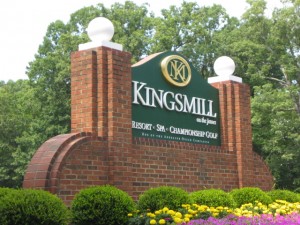
Over the course of the past few years, homeowners in the Williamsburg development of Kingsmill on the James have become more vocal over the continued control by the community’s developer, Busch Properties, Inc. In May 2010, Kingsmill resident and a William & Mary Law School professor filed a lawsuit against Busch Properties. On August 20, 2010, the Williamsburg/James City Circuit Court heard the demurrer filed by Busch Properties. The court granted the demurrer. The Plaintiff appealed to the Virginia Supreme Court. The Court declined to hear the appeal. The Plaintiff filed a petition for rehearing that the Court refused to hear by an order dated June 16, 2011.
HOA Transition