


Part 1 on Virginia’s Unauthorized Practice of Law Rules and HOAs – Where do we find guidance?
Mention the unauthorized practice of law when discussing homeowner and condominium associations and typically the room gets very quiet. Associations, board members and managers strive to keep their budgets low, but compliance with new laws and regulations, keeping up with the collection of assessments, and the upswing in litigation involving homeowner and condominium associations makes it very difficult. When matters become a “legal issue,” board members and managers are best advised to seek legal counsel to ensure that the association is being adequately protected and represented, and that the board members and the managers are not engaging in activities that the Commonwealth might find to be the unauthorized practice of law.
We previously blogged on questions of the unauthorized practice of law when an unlicensed attorney serves on the association’s Board of Directors. In our next two blogs, we will review other issues involving questions of the unauthorized practice of law. In this blog, we discuss where we look for guidance, and in a subsequent blog, we will review Virginia decisions and opinions on the unauthorized practice of law.

ADA Compliance – (Another) Update on HOAs, Condos and Swimming Pools
We have blogged about new requirements under the Americans with Disabilities Act (“ADA”) that may affect Homeowners Associations and Condominium Associations that own swimming pools, wading pools, or spas. Subsequently, we updated our previous post to report upon an update to the required compliance date.
The Justice Department has now issued a “final rule” revising “the Department of Justice regulations implementing the Americans with Disabilities Act to extend until January 31, 2013” as the compliance date for the ADA Standards for Accessible Design for existing pools and spas.
Consequently, if your HOA or Condo Association allows non-members of the association to use its pool in exchange for some form of compensation, your pool may fall under the definition of a public accommodation. If it does, the association would have to comply with the new ADA Standards and provide accessible entry and exits no later than January 31, 2013. What does that mean for your HOA?


Continue reading “ADA Compliance – (Another) Update on HOAs, Condos and Swimming Pools”
Don’t Let the Bedbugs Bite. . .Your Condominium Neighbor!
When water leaks from one condominium into another, determining the responsible party is usually not too difficult. But what about when the hazard isn’t water, but bed bugs, parasitic insects of the cimicid family that feed exclusively on blood and often take up residence nearby or inside of beds, bedding and/or other sleep areas, who is responsible then? This blog post will review some of the issues regarding condos and bedbugs.

Continue reading “Don’t Let the Bedbugs Bite. . .Your Condominium Neighbor!”
Can a Virginia HOA prohibit the posting of political signs?
Well, it’s that time of year when signs start popping up in neighborhoods as election day draws near. In neighborhoods governed by a homeowner or condominium association, boards of directors are sometimes asked to enforce sign restrictions when one neighbor complains about another’s political sign (and probably, the neighbor’s choice of candidate).
A person’s first response typically is “I have the right to free speech and you can’t stop me from posting my political sign on my property!” However, is that the end of the discussion? This blog post reviews a community association’s rights and responsibilities regarding political signs.

Continue reading “Can a Virginia HOA prohibit the posting of political signs?”
2015 General Assembly Update for Virginia Community Associations
The legislation that passed the 2015 General Assembly Session is mostly helpful to Virginia HOAs–clarifying issues created by some legislation, and providing solutions for owner apathy and bank foreclosure problems for associations.
Continue reading “2015 General Assembly Update for Virginia Community Associations”
How to Run An Effective HOA Board Meeting
Have you ever asked yourself after an Association board meeting “what went wrong?” The flow of the meeting was off, the meeting went on way too long and the atmosphere was unwelcoming for the owners who came to observe. With some careful preparation and attention to some simple tips, you can leave your next board meeting with the feeling that everything was right on track. Although we go into much greater detail when we hold our annual Board training seminars for our clients, this blog post provides some helpful tips to run your next board meeting.

Continue reading “How to Run An Effective HOA Board Meeting”
2014 CAI Annual Legal Seminar in Las Vegas
Susan Tarley is attending the 2014 CAI Legal Seminar in Las Vegas this week. This seminar brings together all of the leading community association legal professionals and is chock-full of interesting classes. As stated in the brochure, “The Law Seminar provides a unique learning opportunity to discuss emerging trends and legislative issues important to the practice of community association law.”
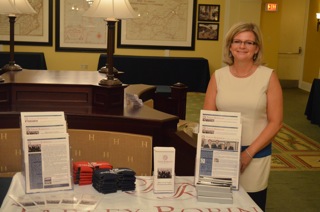
On Wednesday night, Susan will attend the dinner for all attorneys who have been admitted into the College of Community Association Attorneys (“CCAL”). Susan is one of fewer than 150 attorneys nationwide to be admitted to CCAL, for distinguishing herself through contributions to the evolution or practice of community association law.
On Thursday afternoon, Susan will be a panelist on a Panel of Pundits. This panel of six distinguished HOA attorneys will field questions via Twitter, text message, computer, and in person. If you have a question, click here for the details and ask it!
On Friday, Dan Abrams from ABC is the keynote speaker. Finally, on Saturday, there are sessions discussing issues HOAs face in collections and insurance.
Our attorneys participate and take leadership roles in our areas of practice in order to provide our clients with fully informed advice. By participating in events like the annual CAI Legal Seminar, we do our best to serve our clients.
Virginia Homeowner and Condominium Association Complaint Procedures must be adopted by September 29, 2012
We blogged about the 4 things your HOA needs to know about Virginia’s complaint process, and provided some guidance for Implementing an HOA Complaint Procedure. Now, the Common Interest Community Ombudsman has approved final regulations for the required Complaint Procedure. The Ombudsman Regulations are effective July 1, 2012, which means that community associations have until September 29, 2012 to adopt a Complaint Procedure.
This blog post summarizes the new regulations.
