


HOAs and Transition from Developer Control – 101
Owners in most community associations—both homeowner associations and condominium associations—eventually reach the point where the developer transfers control of the Board of Directors to the owners. This blog post provides an introduction to the transition process and what owners can expect.

Continue reading “HOAs and Transition from Developer Control – 101”
Pesticides, Fungicides, and Herbicides: Why do Virginia HOAs need to know the difference?
There are many issues that confront your common interest community as its board of directors and management company work hard to maintain the HOA. One issue that has recently come up is the need to be knowledgeable about the chemicals an HOA applies to its common areas.
The Property Owners’ Association Act in Virginia Code § 55-510.3 and the Condominium Act in Virginia Code § 55-79.80:01 both require that an association post notice of all applications of pesticide in or upon the common areas/elements. This notice must be provided by conspicuous signs placed in or upon the area where the pesticide will be applied, at least 48 hours prior to application. This blog post analyzes one particular question that an association should consider when applying chemicals to its common areas: What is a pesticide?

“Aging In Place” – How can HOAs address aging communities?
When we think of the challenges of overseeing homeowners associations, we might think of overgrown lawns, late assessment payments, and aggressive pets. But another challenge has been waiting in the wings: the aging of America’s “baby boomer” generation, many of whom are choosing to live out their golden years in their homes. This rising trend is presenting new and unique challenges for Community Associations. It is the wave of the future and the future is now.

Continue reading ““Aging In Place” – How can HOAs address aging communities?”
Another Thanks to Construction Law Musings – HOAs and Construction Defects
Richmond Construction Law attorney Chris Hill, my friend and colleague, permitted me another opportunity to blog at his award-winning blog Construction Law Musings. Chris is an outstanding Virginia attorney, and his blog is a great source of information on construction law, including the intricacies of mechanic’s liens. You can also follow him on Twitter, @ConstructionLaw.
Chris has a regular feature called “Guest Post Friday” in which he invites other bloggers to contribute to his Musings. For this blog, we wrote a post exploring the statutory warranties, provided in Va. Code § 55-79.79 of the Condominium Act, that require the Declarant to warrant “all of the common elements for two years.”
Here’s a brief excerpt of the post:
When either a commercial or residential condominium development nears the time of automatic transition, the developer and the owners face many challenges. The developer, or “Declarant,” must transfer responsibility for management, enforcement of the Condominium Instruments, and finances, amongst other responsibilities, to the new owner-controlled Board of Directors. With the pending departure of the Declarant, owners can become concerned about possible construction defects with the common elements. This blog post discusses the process and responsibilities under the statutory warranties provided by the Virginia Condominium Act.
Read the complete blog at Construction Law Musings, as well as many other informative posts on Chris’ outstanding blog. Thanks again, Chris!

2015 General Assembly Update for Virginia Community Associations
The legislation that passed the 2015 General Assembly Session is mostly helpful to Virginia HOAs–clarifying issues created by some legislation, and providing solutions for owner apathy and bank foreclosure problems for associations.
Continue reading “2015 General Assembly Update for Virginia Community Associations”
HOAs, ADA, and FHA: regulating “Service or Assistance Animals”
Recent amendments to the Americans with Disabilities Act (the “ADA”) regulations limit the definition of “service animal” to any dog that is individually trained to do work or perform tasks for the benefit of an individual with a disability, including a physical, sensory, psychiatric, intellectual, or other mental disability. The amendments specify that providing “emotional support, well-being, comfort, or companionship do not constitute work or tasks” under the new definition.
On the other hand, if your situation is not an ADA issue but rather a Fair Housing issue, a recent memo clarifies that the new definition is not applicable to the Fair Housing Act (the “FHA”). The FHA does not contain a specific definition of “service animal.” Under the FHA, animals that provide emotional support have, in certain instances, been recognized as necessary assistance animals as a reasonable accommodation. The FHA permits individuals with disabilities to keep an assistance animal as a reasonable accommodation when there are limitations imposed by the homeowner or condominium association on animals and pets.

Continue reading “HOAs, ADA, and FHA: regulating “Service or Assistance Animals””
2014 CAI Annual Legal Seminar in Las Vegas
Susan Tarley is attending the 2014 CAI Legal Seminar in Las Vegas this week. This seminar brings together all of the leading community association legal professionals and is chock-full of interesting classes. As stated in the brochure, “The Law Seminar provides a unique learning opportunity to discuss emerging trends and legislative issues important to the practice of community association law.”
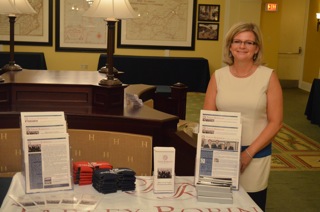
On Wednesday night, Susan will attend the dinner for all attorneys who have been admitted into the College of Community Association Attorneys (“CCAL”). Susan is one of fewer than 150 attorneys nationwide to be admitted to CCAL, for distinguishing herself through contributions to the evolution or practice of community association law.
On Thursday afternoon, Susan will be a panelist on a Panel of Pundits. This panel of six distinguished HOA attorneys will field questions via Twitter, text message, computer, and in person. If you have a question, click here for the details and ask it!
On Friday, Dan Abrams from ABC is the keynote speaker. Finally, on Saturday, there are sessions discussing issues HOAs face in collections and insurance.
Our attorneys participate and take leadership roles in our areas of practice in order to provide our clients with fully informed advice. By participating in events like the annual CAI Legal Seminar, we do our best to serve our clients.
2013 Legislative Update for Virginia HOAs
The (“LAC”) had a busy 2013 legislative session. This is my third year on the LAC and each year brings new challenges. Our mission is to monitor and influence legislation affecting community associations. This year I served as the Chair of the LAC and we monitored over 30 bills and were active on over 10 of the bills. We were successful in getting some bills tabled, some modified, and some passed. All of the bills cited below are effective July 1, 2013 unless otherwise noted. If you have any questions on the impact of these changes for your community, please let us know.
Legislation
Continue reading “2013 Legislative Update for Virginia HOAs”
Susan Tarley named to CAI Legislative Action Committee

Susan was named recently to the Community Association Institute’s Virginia Legislative Action Committee (“VALAC”). VALAC monitors legislation affecting Virginia community associations in which more than 500,000 homeowners reside. VALAC is known as the “resource for providing accurate, timely, influential input to Virginia legislators.” You can follow Legislative Updates regarding community associations for the upcoming General Assembly session here.
Susan has long been an active participant in the CAI as a Board Member and Past President. If you have any legislative suggestions, call or send an email.