


ADA Compliance – (Another) Update on HOAs, Condos and Swimming Pools
We have blogged about new requirements under the Americans with Disabilities Act (“ADA”) that may affect Homeowners Associations and Condominium Associations that own swimming pools, wading pools, or spas. Subsequently, we updated our previous post to report upon an update to the required compliance date.
The Justice Department has now issued a “final rule” revising “the Department of Justice regulations implementing the Americans with Disabilities Act to extend until January 31, 2013” as the compliance date for the ADA Standards for Accessible Design for existing pools and spas.
Consequently, if your HOA or Condo Association allows non-members of the association to use its pool in exchange for some form of compensation, your pool may fall under the definition of a public accommodation. If it does, the association would have to comply with the new ADA Standards and provide accessible entry and exits no later than January 31, 2013. What does that mean for your HOA?


Continue reading “ADA Compliance – (Another) Update on HOAs, Condos and Swimming Pools”
A Checklist to improve the effectiveness of your HOA Board of Directors
For your homeowners association, here’s a simple, but effective and invaluable checklist of suggested resolutions to improve the Board of Directors in your community association.

Board Checklist
- Set-up your board of director orientation with Tarley Robinson, PLC. This service is provided at no charge to our clients. We will send out a an email and letter to schedule an orientation shortly after your board of director elections. Email us to make sure you are on our mailing list.
- Review your documents with your manager and attorney, or if self-managed, with your board and attorney, to determine whether you are operating in compliance with your documents and whether your documents comply with the law.
- Encourage civility, applaud the good deeds of neighbors and provide solid leadership. Remember that you are part of a community.
- Schedule an appointment with your insurance agent to review your current policies. Confirm that your policies comply with any insurance requirements in your documents. Find out if you should change your deductibles. Determine if you are paying the best price.
- Implement your Complaint Policy and Copying Policy. You are required to have them.
- Conduct efficient and effective board meetings. Spend some time working on the processes and procedures for your board meetings. Seek input from your board members, manager and attorney.
- Follow the legislation affecting community associations. The Virginia Legislative Action Committee will be working hard to review proposed legislation and determine its impact on community associations. Updates will be posted at http://www.cai-valac.org/
- Review your Reserve Study. Virginia law request annual review of your Reserve Study. If you do not have a Reserve Study to review, resolve to obtain one. It is the law.
- Conduct a risk assessment relative to safety and the use of your Common Areas or Common Elements. Follow-up with appropriate action, be it implementing safety rules, repairing an unsafe area or item, or posting a warning sign.
- Attend seminars provided by CAI. The Central Virginia Chapter Community Association Day, for example, is a daylong event that includes some great educational opportunities.
Tarley Robinson, PLC, Attorneys and Counsellors at Law
Williamsburg, Virginia

How does our HOA hire a Reserve Study specialist? (Part 3 of a 3 part series on Reserves)
Although Virginia law does not address who can perform a reserve study, it is clearly in the best interest of an association to hire a credentialed professional to conduct a reserve study for the community. Professionals who provide reserve studies include licensed Professional Engineers (PE), Architects (AIA and/or RA) and experts such as a Reserve Specialist (RS) or Professional Reserve Analyst (PRA).

Does Virginia law require an HOA to transition automatically to homeowner control of the Board of Directors?
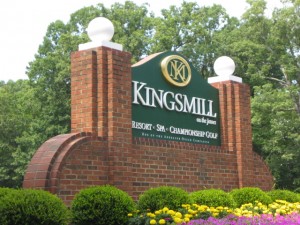
Over the course of the past few years, homeowners in the Williamsburg development of Kingsmill on the James have become more vocal over the continued control by the community’s developer, Busch Properties, Inc. In May 2010, Kingsmill resident and a William & Mary Law School professor filed a lawsuit against Busch Properties. On August 20, 2010, the Williamsburg/James City Circuit Court heard the demurrer filed by Busch Properties. The court granted the demurrer. The Plaintiff appealed to the Virginia Supreme Court. The Court declined to hear the appeal. The Plaintiff filed a petition for rehearing that the Court refused to hear by an order dated June 16, 2011.
HOA Transition
Okay, how do we establish a funding plan for our HOA’s Reserves? (Part 2 of a 3 part series on Reserves)
Once an association has obtained a reserve study, two questions arise: 1) Do we have to fund a reserve account? and 2) If so, how do we fund a reserve account?
The statutes for condominiums and property owners associations require an association’s budget to include, among other things, an annual amount to fund the reserve account that is consistent with the obligations in the reserve study. This means that an association should be placing funds into the reserve account that permits it to meet is obligations to repair, replace and restore capital components based on the estimated replacement cost, the estimated remaining life and the estimated useful life of the capital component.

Rental Restrictions in HOAs permitted according to the Virginia Attorney General
In many HOAs, an issue arises when a homeowner purchases real estate as an investment property intending to lease the home or condo unit. In those situations, the homeowner becomes a “landlord” rather than a resident owner and the situation causes concerns for many homeowner and condominium owner associations. Many association documents contain restrictions on leasing property. In response to an inquiry, the Attorney General for Virginia has issued an official advisory opinion concerning the imposition of rental restrictions in common interest communities concluding that if the restriction is adopted correctly and for a legitimate purpose, the rental restriction is valid.

Continue reading “Rental Restrictions in HOAs permitted according to the Virginia Attorney General”
HOAs – What are your Governing Documents?

It’s the beginning of a new year so let’s start with some basic nuts and bolts information regarding homeowners associations. We’ll begin this series of blog articles with a discussion of the phrase “Governing Documents” which is used by board members, managers and homeowners.
What are the Governing Documents? Continue reading “HOAs – What are your Governing Documents?”
Requests to Inspect and Copy Community Association or Company Records: Should it be this complicated?
A Virginia Beach jury found a condominium association liable for failing to permit unit owners an opportunity to inspect and copy association records. Not only must the condo board allow inspection and copying, they must pay for an audit of the association records and pay $50,000 for the unit owners’ attorneys’ fees.
These questions arise frequently. This blog post reviews the various Virginia statutes that address the right to inspect and copy records for companies, HOAs and condominium associations.

Benefits of HOAs Part 3: The Importance of Assessments to your Community
To many homeowners, the assessments they pay to their homeowners or condominium association are just one more bill each month. Too often, owners don’t realize the benefits they get in exchange for these assessments. Some owners even go so far as to stop paying their assessments. A careful review of your association’s budget would show that the benefits for owners that come from their assessment payments far surpass the cost of the assessment. But when an owner chooses not to pay, everyone in the community bears the consequences.

Continue reading “Benefits of HOAs Part 3: The Importance of Assessments to your Community”
Ban on kids playing football = housing discrimination lawsuit against Virginia HOA
Boards of Directors are empowered by statute in Virginia and often times by the governing documents of the community association to enact rules and regulations concerning common areas, common elements, recreational facilities or other areas of association responsibility. Rules related to the use of common areas or common elements and recreational facilities should be based on concerns about safety, sanitation and nuisance. In certain instances a Board of Directors may want to enact a rule to address the activities of children – limiting their pool time, forbidding children under a certain age from using recreational facilities or prohibiting certain activities on common areas or elements. Be careful, the rule you enact may violate the federal and state Fair Housing Act.
According to a Complaint filed against a Chesapeake condominium association, the association had a “Group Sports Activity” rule that banned organized sports activities in the common areas without approval of the board. Concerns were raised whether this rule banned activities such as a parent and child passing a football.The Commonwealth of Virginia’s Fair Housing Board filed a housing discrimination lawsuit against Cedarwood Condominium Association, a Chesapeake condominium association. There have not been many of these lawsuits.
