


Virginia Supreme Court upholds arbitration award granted to homeowners who sued their HOA
It is relatively routine for developers or “declarants” to include arbitration provisions into the declaration of restrictive covenants recorded to establish a common interest community. Generally, arbitration clauses are preferred by developers for a variety of reasons including avoiding a jury and having a say in the choice of the fact-finder. However, those decisions made by the developers have long lasting effects upon homeowner boards following transition, because it is difficult for a board to effect a change in the documents.

Fight over beer-pong game covered by insurance?
It’s an unfortunate fact of life that you may get involved in a lawsuit. If you are at fault in an automobile accident, your auto insurance provides protection. For other types of cases, your homeowners insurance policy can protect you.
Recently our litigation lawyers counseled clients who had been sued. We routinely ask to review their insurance policies. As it turned out, this occurrence was covered by their homeowners policy, saving them tens of thousands of dollars in attorneys’ fees.
This insurance coverage issue was highlighted in a recent Virginia Supreme Court case, Copp v. Nationwide Mutual Insurance Co. In that case, a Virginia Tech student was sued for his actions in a beer-pong game gone bad. His parents thought the costs for his attorneys should be covered by their homeowners policy or their umbrella policy, but Nationwide Mutual declined. On appeal, the Virginia Supreme Court held that because the student alleged he was “trying to protect person or property” when he caused bodily injury, “Nationwide has the duty under its umbrella policy to defend.”
You pay for your insurance policy, make sure that you use the coverage you paid for.
Tarley Robinson, PLC, Attorneys and Counsellors at Law
Williamsburg, Virginia
Homeowner cannot be forced to join a voluntary HOA
In a case from the Chesterfield Circuit Court, the circuit court judge determined that a homeowner could not be forced to pay association dues to a voluntary association. This result is not surprising.

Continue reading “Homeowner cannot be forced to join a voluntary HOA”
Neighbor Law: Tips for Avoiding Boundary Line Disputes
Few real estate topics cause more disputes between owners than those involving activities at a common boundary. We have reviewed boundary line disputes involving trees that straddle property lines and fences that encroach upon boundary lines.
A recent Portsmouth case highlights another issue relating to boundary lines.

Continue reading “Neighbor Law: Tips for Avoiding Boundary Line Disputes”
One important tip for your construction project – Change Orders
The DPOR regulations require Class A Contractors to obtain written change orders “which are signed by both the consumer and the licensee.” This requirement sounds pretty reasonable and easy to maintain, yet the reality is that many contractors fail to fully comply with this provision, leading to possible problems down the road.

You obtained a judgment against your construction contractor, how do you collect?
Sometimes your dispute with your contractor goes all the way to court and you obtain a judgment. However, sometimes the contractor does not have the ability to pay the judgment, so financially, you are out-of-pocket your judgment damages plus your attorneys’ fees. You may have one last alternative to recover at least a portion of your losses through the Virginia Contractor Transaction Recovery Fund (the “Recovery Fund”).
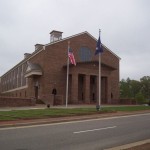
Williamsburg Courthouse
