


HOAs and the Power to Adopt Rules and Regulations: Is it more limited than we think?
Community Associations that have adopted rules and regulations that permit the association to avail itself of the enforcement capabilities found in Va. Code Ann. § 55-79.80:2 or § 55-513(B) should have counsel review the governing documents or condominium instruments, as applicable, in light of an unpublished Virginia Supreme Court order in Shadowood Condominium Association et al., v. Fairfax County Redevelopment and Housing Authority. In Shadowood, the Court determined that community associations do not have the authority to impose charges or suspend owner’s rights unless the authority is specifically granted in the condominium instruments or governing documents. This blog post analyzes that Court order.

Virginia HOAs and Olde Belhaven – Guest Post on Construction Law Musings
Once again, my friend and colleague, Richmond Construction Law attorney Chris Hill, permitted me the opportunity to blog at his award-winning blog Construction Law Musings. You can get a lot of great information on construction law, including the intricacies of mechanic’s liens, from Chris and his blog. You can also follow him on Twitter, @ConstructionLaw.
For Chris’ blog, we wrote a post exploring the Olde Belhaven case that made it into the national media. Our take is that we must remember that HOA Governing Documents are drafted by counsel for the developers, and when the developers leave, the enforcement of those restrictions is left to the volunteer Boards of Directors of your neighborhood.
Here’s a brief excerpt of the post:
A recent case highlights what happens when an Association’s Board of Directors, trying to uphold its fiduciary duty by enforcing and upholding its governing documents goes head to head with homeowners, both believing that they are in the right. . . .
Our experience is that the volunteer Boards of Directors, when faced with tough choices, try to make decisions consistent with their fiduciary duties, in an attempt to protect the rights of all the owners in the neighborhood. That doesn’t mean they always make the right decisions, but these ordinary people are not ogres, either.
Read the complete blog at Construction Law Musings, as well as many other informative posts on Chris’ outstanding blog. Thanks, Chris!

HOAs and Management Companies – Does your contract say what you think it says?

Many boards of directors for community associations engage management companies to help the board operate their community. These relationships arise from written contracts negotiated by the parties. It is essential that homeowners’ associations and management companies have their contracts reviewed by their experienced HOA attorney.
When determining the terms of a contract, Virginia courts employ what is known as the “plain meaning” doctrine. This doctrine basically means that when an agreement is clear, a court will look to the ordinary meaning of the words of the contract itself. Consequently, the parties need to ensure that all of the terms they believe are part of an agreement are in the written contract itself.
A recent Virginia Supreme Court case presents a prime example of why it is important to have your association attorney review contracts between community associations and management companies. Continue reading “HOAs and Management Companies – Does your contract say what you think it says?”
Part 2 on Virginia’s Unauthorized Practice of Law Rules and HOAs – What is considered the unauthorized practice of law?
We blogged previously about finding guidance in Virginia’s rules on the unauthorized practice of law as they pertain to community associations. In this post, we will review Virginia opinions that address whether certain work performed by managers is the unauthorized practice of law (“UPL”).

(Yet Another) Update on ADA Compliance regarding HOAs, Condos and Swimming Pools
We blogged about the extension granted by the Department of Justice for existing pools to comply with the new ADA Standards for providing accessible entry and exits. Just days after issuing its “Final Rule,” the Department of Justice published a fact information page with Questions and Answers regarding Accessibility Requirements for Existing Swimming Pools at Hotels and other Public Accommodations. The DOJ’s Q&A attempts to answer questions regarding whether your pool shall require accommodations. This blog post analyzes the Q&A.

Continue reading “(Yet Another) Update on ADA Compliance regarding HOAs, Condos and Swimming Pools”
Does Virginia law require an HOA to transition automatically to homeowner control of the Board of Directors?
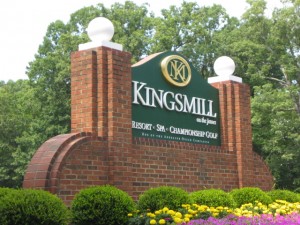
Over the course of the past few years, homeowners in the Williamsburg development of Kingsmill on the James have become more vocal over the continued control by the community’s developer, Busch Properties, Inc. In May 2010, Kingsmill resident and a William & Mary Law School professor filed a lawsuit against Busch Properties. On August 20, 2010, the Williamsburg/James City Circuit Court heard the demurrer filed by Busch Properties. The court granted the demurrer. The Plaintiff appealed to the Virginia Supreme Court. The Court declined to hear the appeal. The Plaintiff filed a petition for rehearing that the Court refused to hear by an order dated June 16, 2011.
HOA Transition
Another Thanks to Construction Law Musings – HOAs and Construction Defects
Richmond Construction Law attorney Chris Hill, my friend and colleague, permitted me another opportunity to blog at his award-winning blog Construction Law Musings. Chris is an outstanding Virginia attorney, and his blog is a great source of information on construction law, including the intricacies of mechanic’s liens. You can also follow him on Twitter, @ConstructionLaw.
Chris has a regular feature called “Guest Post Friday” in which he invites other bloggers to contribute to his Musings. For this blog, we wrote a post exploring the statutory warranties, provided in Va. Code § 55-79.79 of the Condominium Act, that require the Declarant to warrant “all of the common elements for two years.”
Here’s a brief excerpt of the post:
When either a commercial or residential condominium development nears the time of automatic transition, the developer and the owners face many challenges. The developer, or “Declarant,” must transfer responsibility for management, enforcement of the Condominium Instruments, and finances, amongst other responsibilities, to the new owner-controlled Board of Directors. With the pending departure of the Declarant, owners can become concerned about possible construction defects with the common elements. This blog post discusses the process and responsibilities under the statutory warranties provided by the Virginia Condominium Act.
Read the complete blog at Construction Law Musings, as well as many other informative posts on Chris’ outstanding blog. Thanks again, Chris!

Virginia Leadership Retreat – 2012
This week, at the venerable Homestead, the annual Virginia Leadership Retreat will take place. For this event, community managers and their management company executives, guest speakers, and the community association attorneys and service providers from all parts of Virginia will meet to discuss this year’s topic: Changing Times in Community Associations.

Both Susan Tarley and John Tarley will teach classes at the VLR, discussing topics about which we blog frequently. The topics for this year’s event include:
- Learning to Communicate like a Pro;
- The Role of a Manager as a First Responder;
- Leadership Training;
- Preparing for “Forcing Green” Legislation (taught by Susan Tarley);
- Conflict Management Skills;
- Virginia Legislative Update; and
- Dealing with Lawsuits (taught by John Tarley).
The VLR provides us with an opportunity to mingle with other industry professionals so we can provide better service for our clients. Oh, and the golf is pretty nice, too!
Tarley Robinson, PLC, Attorneys and Counsellors at Law
Williamsburg, Virginia