


Virginia Attorney General opinion on HOAs
In Virginia homeowner associations, the governing documents permit a developer to continue control of the HOA’s Board of Directors for a specific period of time, or until a specific number of lots are sold. The length of that period depends upon the governing documents of each association.

This issue has generated litigation in Williamsburg, and now, thanks to Peter Vieth from Virginia Lawyer’s Weekly, we have learned of a formal opinion from the Virginia Attorney General. In an opinion dated January 11, 2013, the AG answered two questions posed by Virginia Senator Bryce E. Reeves. This blog post takes a look at that opinion.
Is the Property Owners Association Act Unconstitutional?
Continue reading “Virginia Attorney General opinion on HOAs”
Another Thanks to Construction Law Musings – HOAs and Construction Defects
Richmond Construction Law attorney Chris Hill, my friend and colleague, permitted me another opportunity to blog at his award-winning blog Construction Law Musings. Chris is an outstanding Virginia attorney, and his blog is a great source of information on construction law, including the intricacies of mechanic’s liens. You can also follow him on Twitter, @ConstructionLaw.
Chris has a regular feature called “Guest Post Friday” in which he invites other bloggers to contribute to his Musings. For this blog, we wrote a post exploring the statutory warranties, provided in Va. Code § 55-79.79 of the Condominium Act, that require the Declarant to warrant “all of the common elements for two years.”
Here’s a brief excerpt of the post:
When either a commercial or residential condominium development nears the time of automatic transition, the developer and the owners face many challenges. The developer, or “Declarant,” must transfer responsibility for management, enforcement of the Condominium Instruments, and finances, amongst other responsibilities, to the new owner-controlled Board of Directors. With the pending departure of the Declarant, owners can become concerned about possible construction defects with the common elements. This blog post discusses the process and responsibilities under the statutory warranties provided by the Virginia Condominium Act.
Read the complete blog at Construction Law Musings, as well as many other informative posts on Chris’ outstanding blog. Thanks again, Chris!

Can I cut down my neighbor’s tree when its branches overhang my property?
In our ever crowding residential areas, more of us experience the situation in which the limbs of a neighbor’s tree overhang our property line. Most of the time, these limbs do not pose us any concern, but questions do arise as to whether we have the right to prune our neighbor’s trees. In the past,the Virginia rule has been that you could trim the branches of your neighbor’s tree up to your property line. However, the Virginia Supreme Court expanded that long-standing rule when it decided that an owner whose property was damaged by the root system of a neighbor’s tree may be entitled to more relief than simply cutting back the roots and overhanging branches to the property line.

Continue reading “Can I cut down my neighbor’s tree when its branches overhang my property?”
My Commercial Tenant is gone . . . should I re-enter the Property?
Sometimes commercial tenants, unable to stay current with their lease obligations, decide to close up shop and abandon their leased premises. In those circumstances, commercial landlords need to know their options. This blog post discusses a commercial landlord’s options when a commercial tenant abandons its lease.

Continue reading “My Commercial Tenant is gone . . . should I re-enter the Property?”
Arbitration instead of Court? Be careful what you ask for
Over the past 15 years or so, “arbitration” provisions have appeared with increasing frequency in a wide variety of contracts. For example, declarations of covenants and restrictions recorded for homeowners associations, construction contracts, employment contracts, and commercial leases all may contain arbitration clauses. Arbitration may be a good idea, but you should know what “arbitration” means before you agree to be bound by such a provision.

Many people confuse the terms “mediation” and “arbitration.” Mediation refers to a process whereby a third-party helps facilitate a negotiated settlement between two or more parties. A mediator does not make decisions, does not take evidence, and does not conduct hearings. Parties simply negotiate and the mediator helps foster those negotiations.
Conversely, arbitrations are conducted like regular trials, with a judge-like arbitrator (or arbitrators) making a final decision based upon the evidence presented, and hopefully the law of your jurisdiction. Appeals of an arbitrator’s decision are virtually nonexistent.
Continue reading “Arbitration instead of Court? Be careful what you ask for”
What does it mean to be on the Board of Directors of your HOA? Fiduciary Duties (Part 1 of a series)

Board members are told that they have fiduciary duties to the community association, but what does that really mean? Fiduciary duties arise because the members of the association entrust a board member to act in the best interest of the association when handling the association’s business.
There are three components that are important to understand fiduciary duty. First, the Virginia Code, at § 13.1-870, imposes on directors a requirement that a director exercise her duties in good faith and in the best interest of the association. This requirement is the so-called “business judgment” rule. Second, Virginia case law imposes duty of care that requires a board member to act as a reasonable person would under similar circumstances. Third, Virginia case law imposes a duty of loyalty that requires a board member to put the association before any personal interest. These last two duties are referred to as “common law” duties. Continue reading “What does it mean to be on the Board of Directors of your HOA? Fiduciary Duties (Part 1 of a series)”
2015 General Assembly Update for Virginia Community Associations
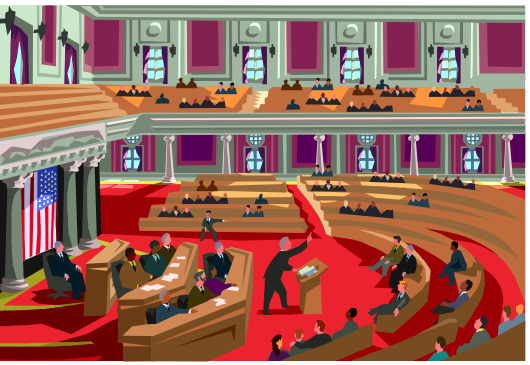
The legislation that passed the 2015 General Assembly Session is mostly helpful to Virginia HOAs–clarifying issues created by some legislation, and providing solutions for owner apathy and bank foreclosure problems for associations.
Continue reading “2015 General Assembly Update for Virginia Community Associations”
Real Estate Listing Agreements for the sale of property: Are they enforceable even if not in writing?
Generally speaking a party can enforce an oral agreement. However, courts will not enforce certain contracts unless they are in writing. For example, under Virginia Code § 11-2, commonly known as the Statute of Frauds, an agreement or contract for services to be performed in the sale of real estate by a real estate broker or real estate sales person is not enforceable “[u]nless a promise, contract, agreement, representation, assurance, or ratification, or some memorandum or note thereof, is in writing and signed by the party to be charged or his agent . . . .”
Most real estate agents and brokers understand the importance of having written listing agreements with their sellers. However, a recent decision of the Supreme Court of Virginia points out that even in the absence of a written listing agreement, an oral listing contract may be enforceable if there is sufficient documentation to remove it from the bar to enforcement of the Statute of Frauds. The Virginia Supreme Court, in the case of C. Porter Vaughan, Inc., Realtors v. Most Reverend Francis X. DiLorenzo, Bishop of The Catholic Diocese of Richmond, 279 Va. 449, 689 S.E.2d 656 (2010), better defined what is meant by “sufficient documentation.”

Part 2 of The Rule of Caveat Emptor in the Sale of Real Estate vs. a Seller’s Duty to Disclose
We wrote earlier about a Charlottesville case in which the court analyzed the duty to disclose for a seller of residential real estate. Although Virginia follows the general rule of caveat emptor, the court ruled that the seller, who was also a licensed real estate agent, may have violated a duty to disclose material adverse facts.
The purchasers alleged two other counts, alleging that the seller failed “to disclose the adjacent drain problems and history of flooding, constituting both fraudulent misrepresentation and constructive fraud.” The court dismissed those claims while providing a nice, succinct history of the law of fraud in the sale of a home. This blog post reviews the general rules of fraudulent misrepresentations in residential real estate sales.

Neighbor Law: Tips for Avoiding Boundary Line Disputes
Few real estate topics cause more disputes between owners than those involving activities at a common boundary. We have reviewed boundary line disputes involving trees that straddle property lines and fences that encroach upon boundary lines.
A recent Portsmouth case highlights another issue relating to boundary lines.

Continue reading “Neighbor Law: Tips for Avoiding Boundary Line Disputes”