


Update on using work email – American Bar Association says lawyers must caution clients of risks
We continually warn about the use of work email accounts to correspond with your attorney:
- 3 tips for safe emailing with your attorney;
- Using a company computer to email your attorney may be a bad idea
- Emails from work computer can waive rights to privileged communications
The American Bar Association has now opined that lawyers should “warn the client about the risk of sending or receiving electronic communications using a computer or other device, or e-mail account, where there is a significant risk that a third party may gain access.” Although the ABA’s opinion is not binding upon any state regulatory bar association, it is likely that state bar associations, like the Virginia State Bar, will review this opinion with interest.

Client Email
Most of our communications are not private, even though we think they are. Work emails are not secure. Regardless of whether lawyers are required or suggested to warn clients, it is not a good idea to use your work email account to email your attorney.
Tarley Robinson, PLC, Attorneys and Counsellors at Law
Williamsburg, Virginia

Attorneys’ Fees and Litigation – When fees get awarded to the “Prevailing Party”
In litigation matters involving common interest communities (otherwise known as homeowners associations (“HOAs”) or condominium owners associations (“condo associations”)), the issue of awarding attorneys’ fees for prevailing parties ultimately arises. Generally, the HOA’s Governing Documents or the condo association’s Condominium Instruments contain such a provision. Otherwise, attorneys’ fees may be recoverable by statute for HOAs and condo associations.
These attorney fee-shifting provisions, either by contract or statute, are contrary to the typical “American Rule” cases in which each side pays their own attorneys’ fees. Because litigation has become so expensive to pursue, whether to award attorneys’ fees, and the amount of any award, has become separate litigation on its own at the conclusion of cases.
In the recent case of Dewberry & Davis, Inc. v. C3NS, Inc., the Virginia Supreme Court was faced with the issue of “whether the circuit court erred in applying an attorneys’ fees provision of a contract.” We had previously blogged about this case, because in the underlying contract between the parties, Dewberry & Davis, an engineering company, had limited its liability for damages. The trial court had determined the limitation of liability clause was void, pointing to a recent change to Virginia Code § 54.1-411that permitted an engineering company to include a limitation of liability clause. Because the contract predated the code change, the court determined that those changes “demonstrate that the General Assembly fully intended to alter the statute’s intent.”
The case continued to trial, and eventually, upon appeal, to the Virginia Supreme Court. This blog post explains that Supreme Court decision relating to the award of attorneys’ fees.

Continue reading “Attorneys’ Fees and Litigation – When fees get awarded to the “Prevailing Party””
When is a “Contract” not a Contract?
We know that in Virginia, the parties to a contract are bound to the terms of that contract. We also know that Virginia courts look to the terms of that contract to determine each party’s rights and obligations. But what is a “contract?” This blog post looks at a recent Virginia Supreme Court case that gives a little guidance to answer that question.

Emails from work computer can waive rights to privileged communications
We have written on the issues that arise when employees use their work computer for personal business. In that blog article, we referred to a California case in which an appellate court ruled that an employee’s emails to her attorney were not protected by the attorney-client privilege because the company had a written policy that informed employees that computers were not to be used for personal matters, that emails could be monitored to ensure that employees complied with the policy, and that employees should not expect any privacy in the use of their computers.
In local news, former Delegate Phil Hamilton raised a “marital privilege” objection to the use at trial of emails he sent to his wife. Certain communications to and from a spouse can be protected from disclosure. There were complicating factors to this case’s analysis.

Continue reading “Emails from work computer can waive rights to privileged communications”
The Rule of Caveat Emptor in the Sale of Real Estate vs. a Seller’s Duty to Disclose
Simply stated, caveat emptor means “let the buyer take care,” or even more plainly stated: “Buyer beware.” In real estate matters, buyers are warned that they are to “exercise ordinary care in inspecting the condition of property.” Therefore, buyers are generally urged to obtain a home inspection and take such other care prior to closing on their real estate purchase. Otherwise, the buyers may not have any relief if they find adverse conditions after taking possession.
A case arising out of Charlottesville highlights the obligations of the buyers and the sellers in the purchase of a home. In that case, the seller of the home was also a licensed real estate agent, which added another complication regarding the duty to disclose. This blog posts analyzes that court decision, which offers warnings to buyers and sellers of real estate, as well as to licensed real estate agents.

Attorneys’ Fee Provision in a Contract is Rejected as “Unconscionable”
Introduction
As we have previously written, Virginia generally follows the “American Rule” in requests for an award of attorneys’ fees in litigation cases. Jurisdictions that follow the American Rule require each side to pay their own attorneys’ fees, unless a party can point to a statute or contract provision that allows fee-shifting.
In a recent unpublished order, the Virginia Supreme Court struck a contractual fee-shifting provision. This blog post reviews that decision.
Continue reading “Attorneys’ Fee Provision in a Contract is Rejected as “Unconscionable””
You obtained a judgment against your construction contractor, how do you collect?
Sometimes your dispute with your contractor goes all the way to court and you obtain a judgment. However, sometimes the contractor does not have the ability to pay the judgment, so financially, you are out-of-pocket your judgment damages plus your attorneys’ fees. You may have one last alternative to recover at least a portion of your losses through the Virginia Contractor Transaction Recovery Fund (the “Recovery Fund”).

Williamsburg Courthouse
2014 CAI Annual Legal Seminar in Las Vegas
Susan Tarley is attending the 2014 CAI Legal Seminar in Las Vegas this week. This seminar brings together all of the leading community association legal professionals and is chock-full of interesting classes. As stated in the brochure, “The Law Seminar provides a unique learning opportunity to discuss emerging trends and legislative issues important to the practice of community association law.”
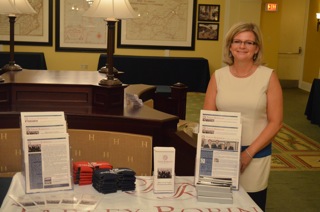
On Wednesday night, Susan will attend the dinner for all attorneys who have been admitted into the College of Community Association Attorneys (“CCAL”). Susan is one of fewer than 150 attorneys nationwide to be admitted to CCAL, for distinguishing herself through contributions to the evolution or practice of community association law.
On Thursday afternoon, Susan will be a panelist on a Panel of Pundits. This panel of six distinguished HOA attorneys will field questions via Twitter, text message, computer, and in person. If you have a question, click here for the details and ask it!
On Friday, Dan Abrams from ABC is the keynote speaker. Finally, on Saturday, there are sessions discussing issues HOAs face in collections and insurance.
Our attorneys participate and take leadership roles in our areas of practice in order to provide our clients with fully informed advice. By participating in events like the annual CAI Legal Seminar, we do our best to serve our clients.
Limited Liability Companies: What happens to an LLC when a Member dies?
This case has been overturned by statute. Check out this blog post for the details.
We have written about the importance of operating agreements to help succession planning for your limited liability company (“LLC”). Operating agreements can help the company with procedures to remove a member, or with procedures to permit a member to leave the LLC on his own accord. This blog post reviews a recent Virginia Supreme Court case that shows the importance, and limitations of your LLC operating agreement to set forth succession planning of a member’s interest when that member dies.

LLC Agreements
Continue reading “Limited Liability Companies: What happens to an LLC when a Member dies?”
James City County offering Good Neighbor Grant to HOAs and other neighborhood associations
We frequently blog on the importance of cooperation and relationship-building in your homeowner association or condominium association. Here is an easy and practical way to build your association’s camaraderie as James City County is sponsoring a Good Neighbor Environment Matching Grant for the fall of 2013.

The county’s stated purpose of the grant ” is to enhance the sense of community and environmental wellness of our neighborhoods through the development and accomplishment of a neighborhood sustainable landscape beautification project.” Consequently, the two categories for the grant are Physical Improvement/Sustainable Landscaping and Multi-Neighborhood Project Partnerships.
The grant is not limited to “formal” HOAs or Condo Associations, as any neighborhood association or neighborhood committee authorized “to manage and/or maintain the common areas of a community” may apply. However, such a neighbor association or committee has a few more obstacles to overcome to apply.
Applications are due on September 30, 2013, and the grants will be announced on October 15, 2013. We will make this information known to our association clients, but anybody is welcome to pass along this link to the application. Let us know if we can help your association apply for this Good Neighbor grant.
Tarley Robinson, PLC, Attorneys and Counsellors at Law
Williamsburg, Virginia